

Management-Free Real Estate Investments
Management-free real estate investment strategies are not one-size-fits-all. Depending on an investor’s objectives, desired level of involvement, liquidity needs, tax considerations, and accreditation status, different structures may be more appropriate than others.
Common Reasons Investors Consider Management-Free Real Estate Investments
Examples include:
-
Retirement or succession planning
-
Reducing management responsibilities
-
Simplifying a real estate portfolio
-
Relocating away from investment properties
-
Seeking passive income opportunities
-
Completing a 1031 Exchange
-
Diversifying by asset type or geography
-
Transitioning from active ownership to passive ownership
DST, DST-to-UPREIT, and QOZ/QOF
What Is a Delaware Statutory Trust (DST)?
A Delaware Statutory Trust (DST) is a real estate ownership structure that allows accredited investors to own a fractional interest in professionally managed real estate, such as multifamily, industrial, medical, self-storage, or retail properties. DSTs allow investors to maintain real estate exposure without the day-to-day management responsibilities associated with direct property ownership.
Certain DST interests may qualify as replacement property for 1031 Exchange purposes, making them an option for investors seeking to defer taxes while transitioning from actively managed real estate. DSTs may also provide access to larger properties and diversification opportunities that might otherwise be difficult for an individual investor to acquire directly.
While DSTs may offer potential benefits, investors should also consider the associated risks and limitations, including illiquidity and limited control over the underlying properties.
What Is a DST-to-UPREIT Strategy?
Certain DST sponsors offer DST-to-UPREIT programs that may become available at the conclusion of a DST’s holding period. In these programs, a DST property may be acquired by an affiliated Real Estate Investment Trust (REIT), allowing investors the opportunity to exchange their DST interest for REIT operating partnership units through a transaction commonly referred to as a 721 Exchange.
This tax-deferred exit strategy may provide investors with increased diversification, potential liquidity opportunities over time, and continued passive ownership. However, after completing a 721 Exchange into REIT operating partnership units, investors generally forfeit the ability to complete future 1031 Exchanges with that investment. Investors should carefully review the risks, limitations, and tax implications associated with any DST-to-UPREIT program.
What Is a Qualified Opportunity Zone (QOZ) / Qualified Opportunity Fund (QOF)?
A Qualified Opportunity Fund (QOF) is an investment vehicle that allows accredited investors to reinvest eligible capital gains into real estate or business projects located within government-designated Qualified Opportunity Zones (QOZs). These investments were created to encourage long-term economic development and investment in designated communities while offering certain tax benefits under current law.
QOFs may provide benefits such as the deferral of eligible capital gains and the potential exclusion of appreciation generated within the investment if applicable holding period requirements and other program requirements are satisfied.
For investors interested in tax-efficient investment opportunities and passive ownership, QOFs represent another investment strategy to consider, subject to their individual objectives, risk tolerance, and tax circumstances.
How Anthony Can Help
Separate from his role at R. J. GULLO COMPANIES, Anthony J. Gullo, in his capacity as a Direct Participation Programs Representative holding FINRA Series 22 and 63 licenses, assists accredited investors in understanding and accessing passive real estate investment opportunities, including Delaware Statutory Trusts (DSTs), DST-to-UPREIT strategies, and Qualified Opportunity Funds (QOFs). These investment structures may offer benefits such as professional management, portfolio diversification, tax-deferral opportunities, and reduced day-to-day ownership responsibilities. Drawing on his extensive real estate investment experience, Anthony provides information and guidance to help investors better understand available opportunities, associated risks, and other important investment considerations.
Direct Participation Programs offered through Concorde Investment Services, LLC (CIS), member FINRA/SIPC, headquartered at 3909 Research Park Drive, Suite 200, Ann Arbor, MI 48108. R. J. GULLO COMPANIES is independent of CIS.
Important Disclosure: R. J. GULLO REAL ESTATE SERVICES, LLC, Russell J. Gullo, and Anthony J. Gullo do not provide brokerage or real estate investment consulting services to clients in exchange transactions where R. J. GULLO 1031 SERVICES, LLC serves as the client's qualified intermediary.
About
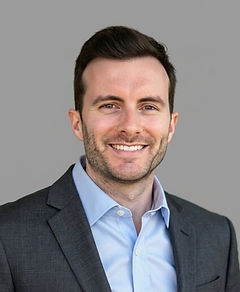

Anthony J. Gullo, CPA, CCIM is the Executive Vice President & COO and a co-owner of R. J. GULLO COMPANIES, where he oversees the firm’s operations and works with clients throughout the firm’s real estate investment services. He is also a Licensed Associate Real Estate Broker and a Real Estate Investment Consultant & Direct Participation Programs Representative.
With more than twenty years of experience in the real estate investment industry, he has structured thousands of successful transactions. He helps clients and their professional advisors develop and implement real estate investment strategies across all the firm’s service lines, including 1031 Exchanges, multifamily investment brokerage, management-free real estate investments, and real estate investment consulting. His work also includes real estate investment analysis, valuation, acquisitions, and dispositions.
Prior to joining R. J. GULLO COMPANIES, he served as a Director in the Real Estate Solutions practice at FTI Consulting in New York City, where he advised commercial real estate companies, private equity funds, pension funds, law firms, investment banks, developers, and high-net-worth individuals. During his tenure, he participated in the reorganization and sale of a $140 million real estate portfolio, a transaction that received the Real Estate Restructuring of the Year award at the Global M&A Network Turnaround Atlas Awards.
Before joining FTI Consulting, he was a Senior Associate in Real Estate Assurance Services at Ernst & Young. His clients included real estate private equity funds with $13 billion of gross assets under management and a publicly traded, self-managed REIT that was among the largest self-storage companies in the United States.
He holds a Bachelor of Science (BS) in Accounting and Accounting Information Systems from Canisius College, a Master of Business Administration (MBA) in Accounting from Canisius College, and a Professional Certificate in Real Estate Finance and Investment from Fordham University. He is a Certified Public Accountant (CPA) in New York, a Certified Commercial Investment Member (CCIM), a Licensed Associate Real Estate Broker in New York, and a Direct Participation Programs Representative holding FINRA Series 22 and 63 licenses. He is a member of the CCIM Institute and the National Association of Realtors (NAR).
Direct Participation Programs offered through Concorde Investment Services, LLC (CIS), member FINRA/SIPC, headquartered at 3909 Research Park Drive, Suite 200, Ann Arbor, MI 48108. R. J. GULLO COMPANIES is independent of CIS.


